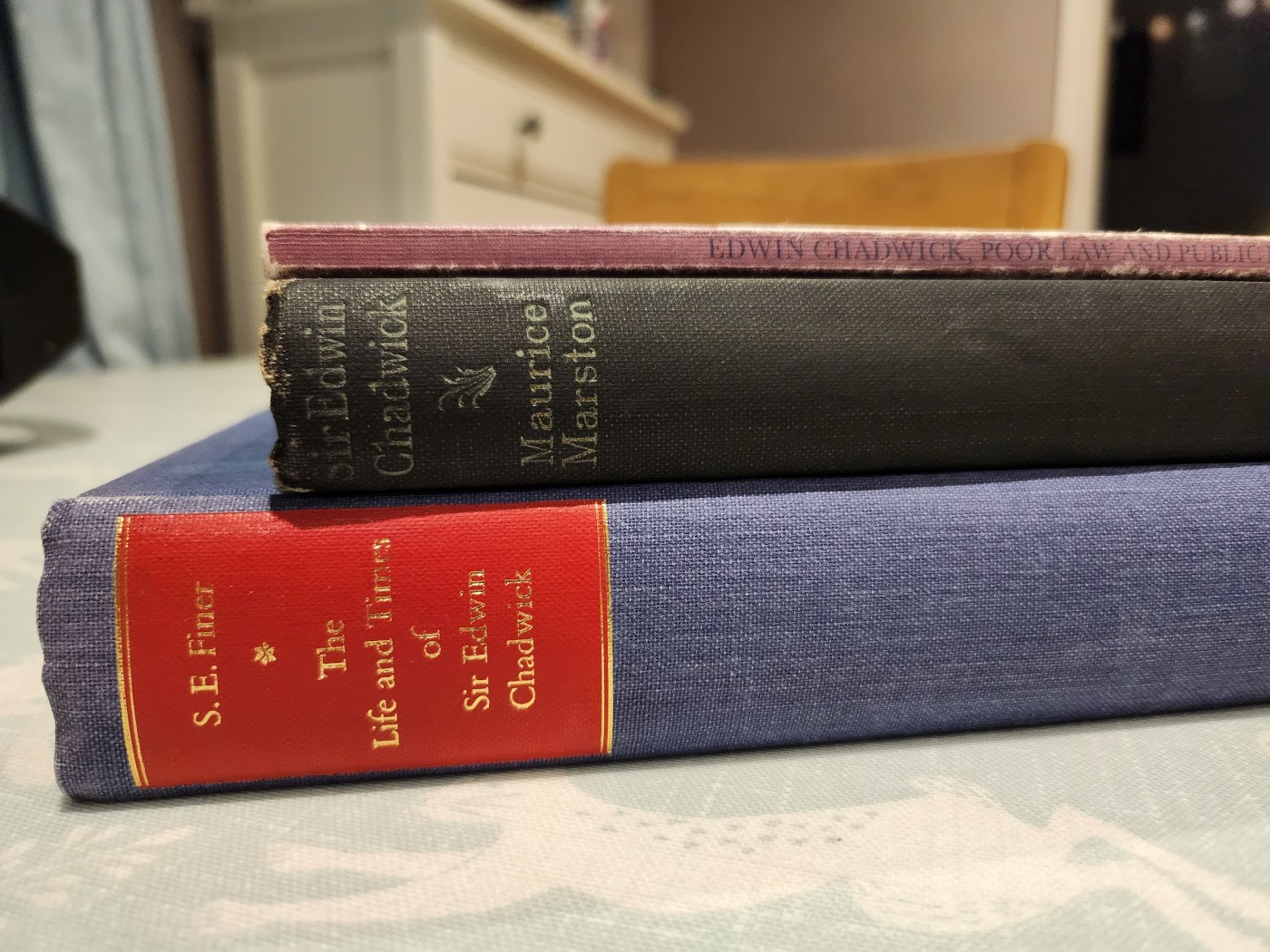
Depending on who you are, and what your interests are then you may already know of Edwin Chadwick. However I would, if I were a betting person, bet a decent amount of money that the average person in 2023 has no idea who he was and what he did to benefit modern society. I must admit that I did not know much about Chadwick until recently which surprised me as I began my research for my future, highly aspirational, book project. It has now become clear that I have become firmly enthralled by his story. More people are likely to have potentially heard of Jeremy Bentham, the utilitarian philosopher who founded University College London and is now an auto-icon on display within it’s main building. The reason I mention Bentham here is that Chadwick was closely linked to him, working with him and being a close friend until Bentham’s death in 1832. I used to regularly walk past Jeremy at the university in my time there, and always think of him fondly.
In summary, Edwin Chadwick had a controversial life and he spent a lot of his time alive being criticised for his ideas around reform and how the poor were treated within the country. It was not until much later on that his ideas were used and form a great deal of how the law works to support those in need today. However, it is not the poor law reforms that I am focused on in my research but his ideas around the treatment of the dead towards the end of the 19th Century.
In the late 1800s there was a growing issue in what happened to people after they died. Tradition had long suited, with the dead being kept at home with the family until their burial. There were no places for the dead to go otherwise in this time, and burial was usually within a week of death. However, overcrowding in cities meant that families were often kept to a single room which the deceased would then be kept in. Although it could be that the deceased was kept on the bed while the family slept on the floor, this clearly was beyond ideal especially if during hot weather. Families would often work 6 days a week, so the only day on which the deceased could be buried would be a Sunday when a day off was available to those working in the family. Further delays could be faced when the family had insufficient funds to pay for the burial and this could mean weeks could pass while the deceased laid at home.
Chadwick could see that this was a growing issue that urgently required some form of change. Of the many improvements he proposed was the idea that mortuaries should be built in order to house the dead until the time at which they were buried. These mortuaries would cover certain parishes and ensure that any form of hygiene issue presented by the deceased was kept away from the living and their homes. While I imagine this was hugely unsettling and uncomfortable for families, it is now apparent it was a much needed change and is how we function today with little expectation in the public mind of keeping their deceased at home.
I will end this post here, with the promise of further parts in the not so distant future.
MG x
 Mortuary Gem
Very interesting Gem x
LikeLike